Tổng hợp một số bài về các bệnh ngoài ra phần 2
https://dermnetnz.org/topics/atypical-mycobacterial-infection/
Atypical mycobacterial infections are infections caused by a species of mycobacterium other than Mycobacterium tuberculosis, the causative bacteria of pulmonary TB and extrapulmonary TB including cutaneous TB; and Mycobacterium leprae, the cause of leprosy.
Atypical mycobacteria may cause many different types of infections, which are divided into the following four clinical syndromes:
Pulmonary disease
Lymphadenitis
Skin and soft tissue disease
Disseminated disease
https://www.patientcareonline.com/view/hard-purple-nodules-your-dx
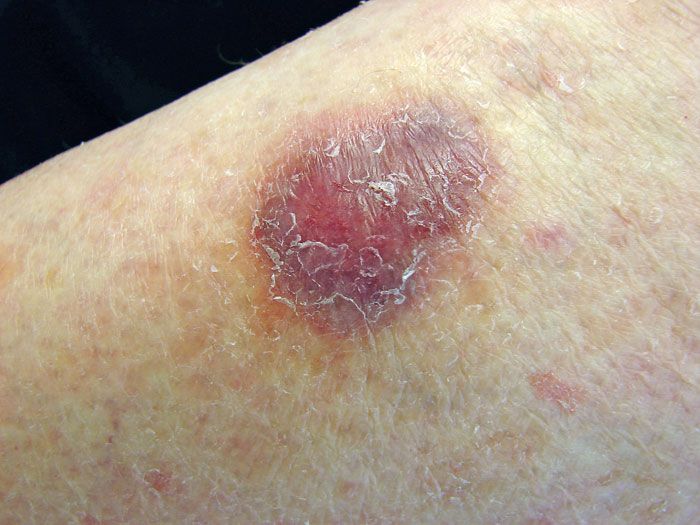
Non-tender, rock-hard, purple colored nodules on her legs.
Nốt sần cứng, màu đỏ tía ở chân.
The violaceous color and configuration of the skin lesions suggests which of the following?
A. Mycobacterial infection
B. Cutaneous lymphoma
C. Leukemia cutis
D. All of the above
Miiskin apps for skin self-examinations.
https://www.aquaculturealliance.org/advocate/seafood-associated-mycobacterial-infections/
https://www.mdedge.com/dermatology/article/176946/medical-dermatology/review-finds-some-therapies-show-promise-managing?sso=true
https://www.everydayhealth.com/skin-lumps/guide/
https://www.bachkhoasaigon.edu.vn/trung-cap-duoc/dieu-kien-kinh-nghiem-mo-quay-thuoc-va-nha-thuoc-tay.htmlhttps://bloggiamgia.vn/cac-benh-ve-da-thuong-gap/
Prurigo nodularis
Prurigo nodularis (PN) is a skin disease that causes hard, itchy lumps (nodules) to form on the skin.[1] The itching (pruritus) can be intense, causing people to scratch themselves to the point of bleeding or pain. Scratching can cause more skin lesions to appear.[2][3] The itching is worsened by heat, sweating, or irritation from clothing.[4] In some cases, people with PN have a history of other diseases including eczema (atopic dermatitis), lymphoma, HIV infection, severe anemia, or kidney disease.[1]
The exact cause of PN is unknown. Although scratching is known to cause more nodules to appear, it is unclear what causes the itching to develop in the first place.[2][3] Diagnosis of the disease is based on observing signs such as extremely itchy skin with the formation of nodules. In some cases, a skin biopsy is used to confirm the diagnosis.[3][4] Treatment may include corticosteroid creams, oral medications, cryotherapy, or photochemotherapy.[1][4][5]
Symptoms
The main symptom of prurigo nodularis (PN) is the formation of hard, very itchy lumps (nodules) on the skin. The nodules can range in size from very small to about half an inch in diameter. The nodules often have a rough, dry top and can range in number from a few to hundreds. Nodules most commonly form on the outer arms, shoulders, and legs. Nodules can also form on the neck and trunk, and they rarely form on the face and palms. They may be lighter or darker in color than the surrounding skin. Scarring may occur after nodules begin to heal.[1][2][3]
The symptoms of PN can begin at any age but are most common in adults between 20-60 years.[2] People who have PN may become very concerned about the appearance of the nodules, and the intensely itchy skin may interfere with sleep or with everyday activities. This can cause people with PN to develop stress and depression.[3]
Cause
The exact cause of prurigo nodularis (PN) is not well-understood. It is thought that nodules are more likely to form when skin has been scratched or irritated in some way. Therefore, the act of a person scratching skin can cause the nodules to form. However, the cause of the skin to originally become intensely itchy is unclear. Many people with PN have a history of eczema (atopic dermatitis), other skin conditions, or allergies.[2]
When people with PN have a skin biopsy, it can be seen that the nerves in the skin are thickened. It is thought that these thickened nerves may send stronger signals to the brain that the skin is itchy. This can cause a person to scratch the skin, which causes more nodules to form and the nerves to become even more thickened. This cycle, called the itch-scratch cycle, is thought to cause an increase in the number of nodules associated with PN. However, exactly why the skin becomes itchy in the first place is unclear and may vary from person to person.
Diagnosis complicated
Diagnosis of these illnesses is complicated by their slow onset and resemblance to other localized skin infections. However, a high degree of suspicion for mycobacterial infection should occur in settings with aquaculture workers and others exposed to fish, shrimp, bivalve shellfish, and their associated environments.
Culture of the offending organism provides a definitive diagnosis, but can take several weeks to complete due to the slow-growing nature of these bacteria. Multiple cultures from separate sites may be required. A biopsy of infected tissue may be needed to obtain specimens for culture and microscopic examination. Specific tissue staining for acid-fast bacilli is sometimes helpful.
Treatment
Treatment for these infections consists of antibiotic administration and, often, surgical drainage and/or excision of infected tissue. There is no one ideal treatment regimen, and therapy is tailored to the individual patient’s requirements and the antibiotic sensitivity of the specific organism involved.
Surgical removal of small lesions is often curative. Surgical intervention is also a frequent necessity for treatment of deeper infections, such as those involving joints and bones. Suggested antibiotic regimens have included tetracyclines, quinolones, aminoglycosides, sulfa drugs, and rifampin.
Treatment can last several months, as response tends to be slow and relapse is likely with too short a regimen. Therapy should be continued for several weeks after the complete disappearance of lesions to assure eradication of the organism. Most of these infections require 3-6 months of treatment. Prognosis is generally good in the absence of disseminated disease.
Một số thuật ngữ:
Occlusion: tắc mạch, sự bít, hấp thụ lấp.
tuberculosis: an infectious bacterial disease characterized by the growth of nodules (tubercles) in the tissues, especially the lungs.
bệnh lao (?)
tubercles (nodules) : nốt sần, cục bướu nhỏ
1
a small swelling or aggregation of cells in the body, especially an abnormal one.
the area feels firm but has irregular nodules which can be painful to touch
2
a small rounded lump of matter distinct from its surroundings, for example, of flint in chalk, carbon in cast iron, or a mineral on the seabed.
3. Steroid
4. Cryotherapy = phương pháp áp lạnh
5. skin biospy
https://medlineplus.gov/ency/article/003840.htm
https://www.aad.org/public/diseases/eczema/types/atopic-dermatitis/self-care

Comments
Post a Comment